 Espaço daPlásticaHospital · Campo Grande
Espaço daPlásticaHospital · Campo Grande
Espaço daPlásticaHospital · Campo Grande
Breast · Surgical procedure
Breast augmentation is the surgical placement of implants to enhance or restore breast volume. Planning takes into account each patient's anatomy, torso proportion, and personal goals — from implant shape to placement. It is also part of breast reconstruction after mastectomy.
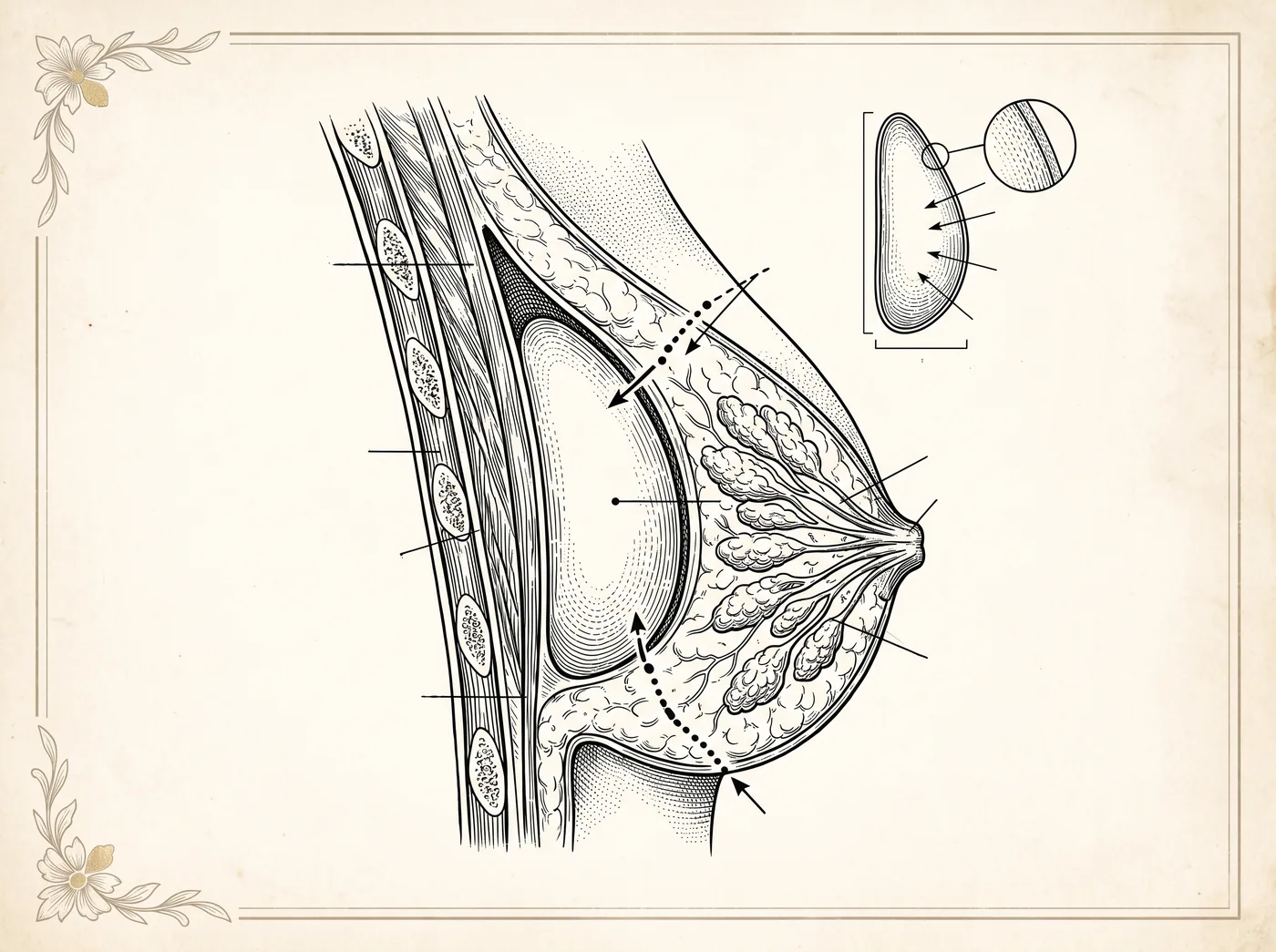
Goals of the procedure
Every surgical procedure involves risks. An individual evaluation with a plastic surgeon is essential to determine the appropriate treatment for each case.
Understanding the procedure
Breast implant surgery consists of placing an implant to shape the volume and contour of the breasts; it is performed in an operating room, under anesthesia, and conducted by the plastic surgery team. Planning starts with an assessment of the anatomy — measurements of the chest and breast, quality and quantity of tissue, position of the fold and the areola — which guides the choice of implant type, the plane relative to the pectoral muscle, and the incision approach. This definition is not standardized: it depends on each patient's characteristics and on the goal established together with the surgeon.
Implants vary in shape, profile, projection, and surface, and there is no single configuration that suits every patient. In cases of breast reconstruction after mastectomy, planning may involve additional steps and be carried out in stages, according to the clinical situation. For this reason, each plan is individual and is only defined after a physical examination and a conversation about expectations.
Among the contemporary approaches to breast augmentation is the rapid recovery technique, whose goal is to allow the patient to resume light everyday activities within a short interval after surgery. This proposal does not rest on a single maneuver, but on the sum of measures that reduce trauma to the tissues: planning based on the patient's own measurements, gentle handling of the structures, precise dissection that respects the anatomical planes and the musculature, and rigorous attention to bleeding control during the operation. By sparing the tissues, the aim is to reduce swelling, bruising, and discomfort in the initial period, favoring a quicker return to light tasks.
It is important to understand this technique as a proposal and a goal, not as a promise. The reference to a return within about 24 hours describes the aim of the approach, not a result assured to every patient: recovery time depends on each person's body, on the extent of the procedure, and on the individual response to surgery, and it remains gradual and monitored by the team. Only the individual evaluation with the plastic surgeon can determine whether the rapid recovery technique is appropriate for each case and what to expect from it.
In general, the surgery is sought by adult women, with fully developed breasts, who wish to increase volume in proportion to their body, restore volume lost after pregnancy, breastfeeding, or weight loss, or seek greater symmetry between breasts of different sizes. The implant is also part of breast reconstruction in patients who have undergone mastectomy. The choice between augmentation and reconstruction changes the entire plan and is discussed case by case.
The indication does not depend on the patient's wishes alone. Overall health, the characteristics of the breast tissue, personal and family history, and the presence of realistic expectations about the procedure are all taken into account. Some situations may contraindicate or postpone the surgery. Only the individual evaluation with the plastic surgeon can indicate whether and when the procedure is appropriate for each person.
Recovery is gradual and varies from person to person, depending on the technique used and each body's response. Even with approaches geared toward rapid recovery, the first days usually involve relative rest, wearing a surgical bra or compression band as directed, and a progressive return to activities, always following the team's guidance. Some swelling, discomfort, and temporary changes in sensation in the area are expected in the initial phase and tend to diminish over time.
Follow-up appointments are part of the process: they make it possible to monitor healing, adjust guidance, and answer questions. The return to more intense physical exertion and to certain activities follows a schedule set by the surgeon, generally longer than the resumption of light tasks. Since timelines and details depend on each case, they should be confirmed during the evaluation and at follow-up visits.
Performing the procedure in an environment dedicated exclusively to plastic surgery means having an in-house operating room, an in-house team, and facilities designed for this type of surgery. Anesthesia, monitoring, and nursing follow hospital protocols, which contributes to patient safety at the different stages. Care before, during, and after surgery takes place within this same facility.
Even so, it is important to remember that every surgical procedure involves risks, and no setting eliminates the need for sound judgment in the indication. The individual evaluation with a plastic surgeon remains essential to define the appropriate treatment for each case, based on the physical examination, health history, and a frank conversation about goals.
Frequently asked questions
There are implants of different shapes, profiles, and surfaces. The choice is made together with the surgeon during the consultation, considering the patient's anatomy, breast tissue, and goals.
Yes — every surgery leaves a scar. Its location depends on the incision approach defined during planning, and the surgeon provides guidance on the care that supports proper healing.
It varies from person to person. In general, strenuous activity should be avoided during the first weeks, with a gradual return to activities as directed by the surgeon at follow-up visits.
Implants do not have a fixed, mandatory replacement date, but they do require periodic medical follow-up and imaging exams as directed by the surgeon.
In most cases breastfeeding is possible, but each situation must be evaluated individually with the surgeon, considering the technique and incision approach used.
Only an individual evaluation with a plastic surgeon can determine the appropriate procedure, after a physical exam, a review of your health history, and an honest conversation about expectations.
The next step
In a hospital dedicated exclusively to plastic surgery, your consultation begins with listening — and ends with a plan made for you.


