 Espaço daPlásticaHospital · Campo Grande
Espaço daPlásticaHospital · Campo Grande
Espaço daPlásticaHospital · Campo Grande
Safety
Why having surgery in a hospital dedicated exclusively to plastic surgery changes the logic of the entire environment — and what the scientific literature has to say about it.
The logic
General hospitals do everything at once: emergency room, urgent care, clinical admissions, infectious diseases, surgeries of every kind. Here, the logic is different — and it redesigns the entire environment.
Hospital Espaço da Plástica has no emergency room. It does not receive urgent cases. It does not admit infectious diseases. This is not a marketing stance: it is in the institution's official registration — hospital care activities, excluding emergency rooms and urgent care units.
In practice, every patient who walks through the door has come for an elective procedure: evaluated, planned and scheduled in advance. There is a single flow. The team prepares for a single kind of surgery. And every space exists for it.
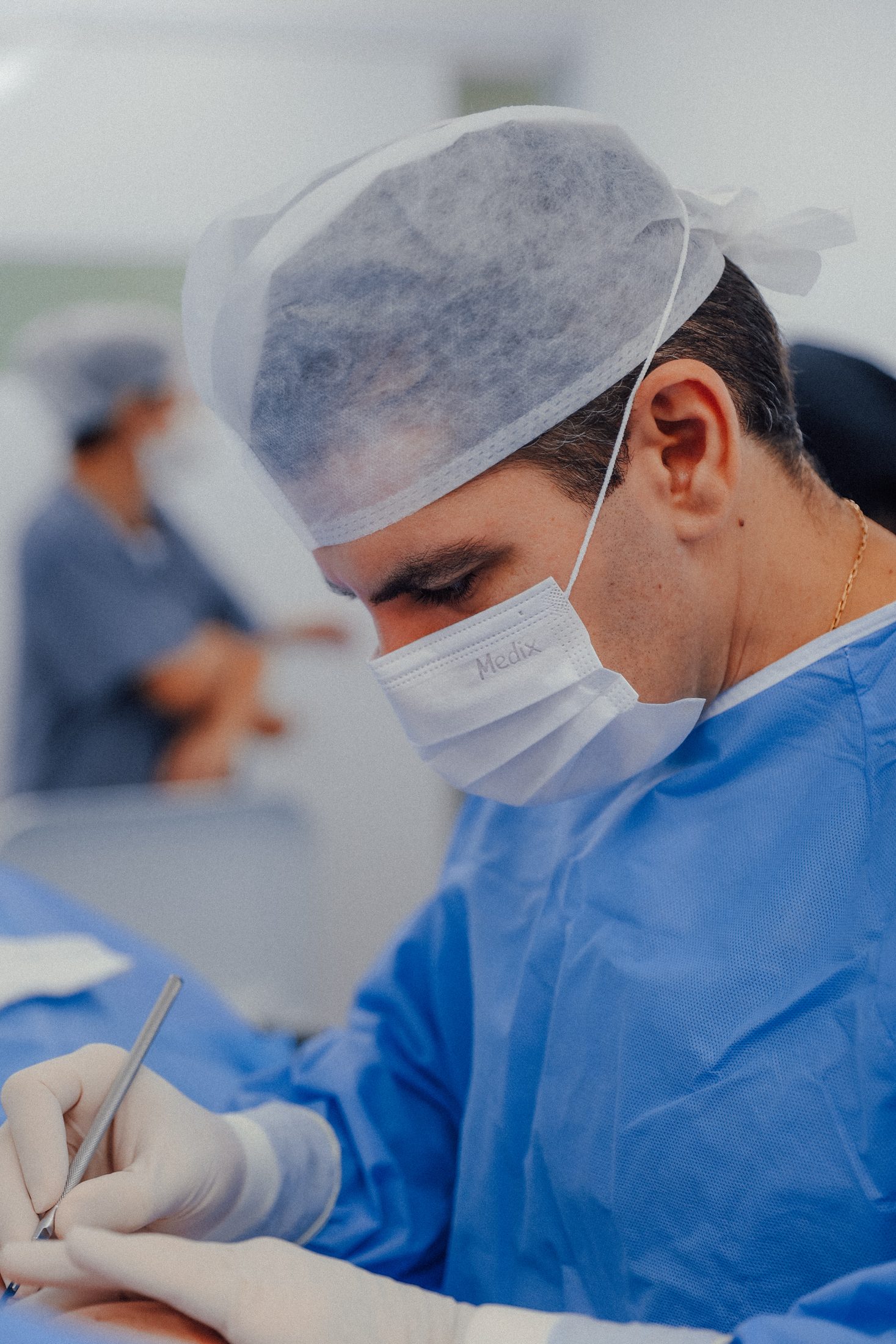 Surgical center
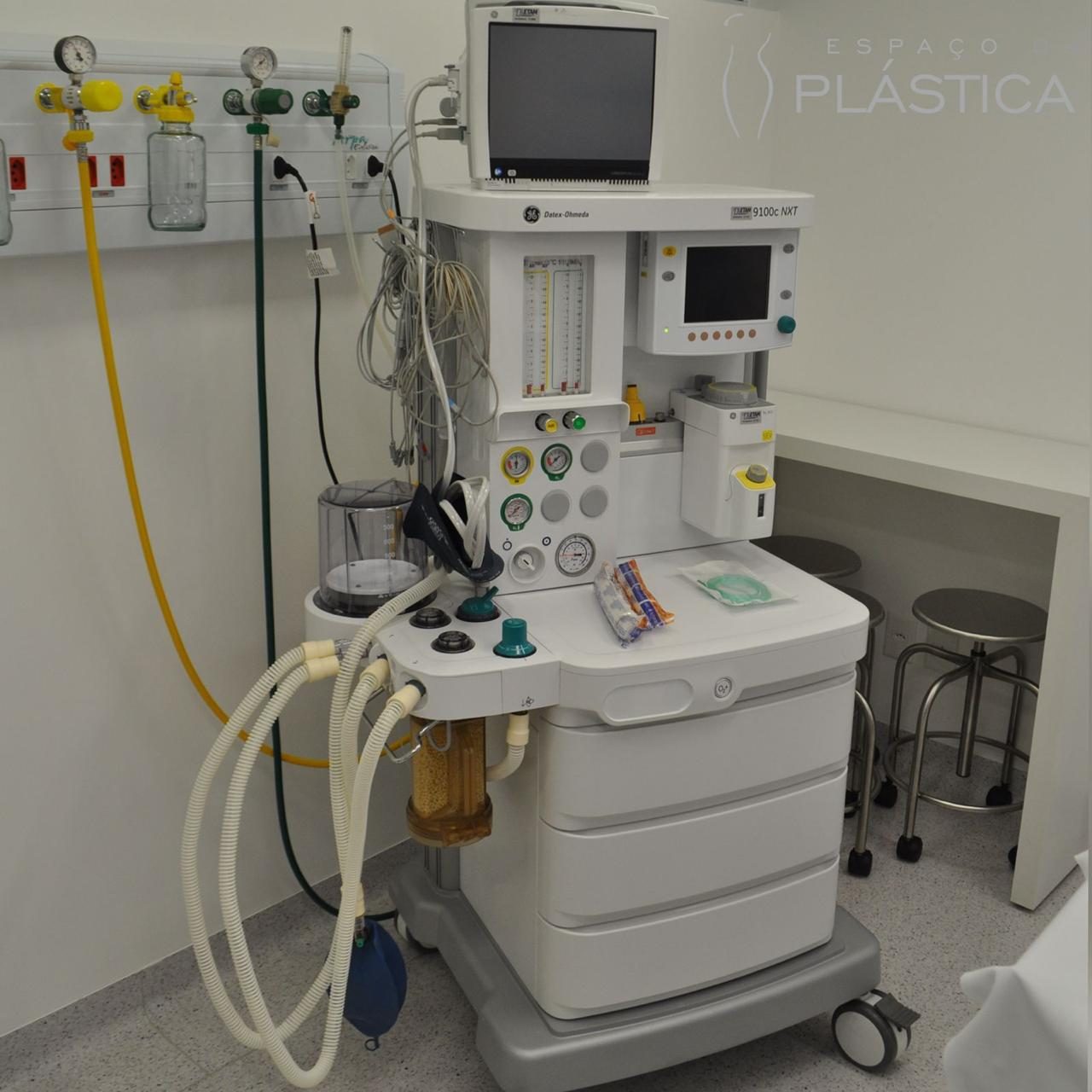 Anesthesia and monitoring
The pillars
No emergency room and no infectious-disease admissions: the hospital's flow is 100% elective surgery, from scheduling to discharge.
A central sterile supply department inside the hospital itself, under the team's direct control — nothing critical is outsourced.
From the operating room to nursing, a team that lives and breathes plastic surgery every day — the same routine, the same standard, repeated with method.
Individual evaluation, testing and careful preparation before any surgical decision. Operating well begins long before the operating room.
Scientific evidence
The question of “where to operate” has already been measured. Three findings from the medical literature, cited as they appear in the sources — no shortcuts, no exaggeration.
In a retrospective review, post-surgical infection leading to reoperation occurred in 0.38% of cases (28 of 7,311) at a single-specialty surgical center, versus 0.81% (23 of 2,867) at a multispecialty center — a statistically significant difference.
Mitchell et al. · Journal of Orthopaedics · 2013A prospective registry of 411,670 procedures at accredited ambulatory surgical centers (2001–2002) documented infection in 388 cases — about 0.09%, all resolved with dressings or antibiotics.
Keyes et al. · Plastic and Reconstructive Surgery · 2004An institutional comparison across eight years: prosthetic joint infection was 1.43% at the general university hospital and 0.75% at the dedicated specialty hospital — 0.61% in the two most recent years of the period.
HSS Journal · 2019How to read these numbers. These are observational studies: they associate dedicated environments with lower infection rates — they do not prove cause and effect. And they come from contexts different from ours: American ambulatory surgical centers and orthopedic hospitals. We cite them because they are the evidence the literature offers today on single-specialty surgical environments — not because they guarantee any outcome. No environment eliminates risk.
Frequently asked questions
The entire environment works around a single kind of surgery. There is no emergency room, no urgent care and no infectious-disease admissions: the flow is exclusively elective, planned in advance. The scientific literature associates single-specialty surgical environments with lower infection rates compared with multispecialty services.
No. The institution's official registration is for hospital care excluding emergency rooms and urgent care units. The entire facility — surgical center, rooms, sterilization and team — is dedicated to plastic surgery.
The central sterile supply department is located inside the hospital itself and operates under the team's direct control. Nothing critical to surgery depends on outside facilities.
Plastic surgeons who are members of the SBCP, the Brazilian Society of Plastic Surgery: Dr. Rodrigo Anache Anbar — Physician · CRM/MS 4999 · RQE 3691 — and Dr. Rafael Anache Anbar — Physician · CRM/MS 5000 · RQE 3692.
Every surgery begins with an individual consultation with the surgeon. From there come the tests, the preoperative instructions — such as pausing certain medications — and the planning of the procedure. No surgical decision is made without this path.
Yes — like any surgical procedure. Complications, although rare, can occur, and that is exactly why preoperative planning, a dedicated environment and post-operative follow-up matter so much. Be wary of anyone who promises otherwise.
Every surgical procedure involves risks. An individual consultation with a plastic surgeon is essential.
Schedule your consultation
Bring your questions. The first conversation exists to answer them — all of them.


