 Espaço daPlásticaHospital · Campo Grande
Espaço daPlásticaHospital · Campo Grande
Espaço daPlásticaHospital · Campo Grande
Non-surgical procedure
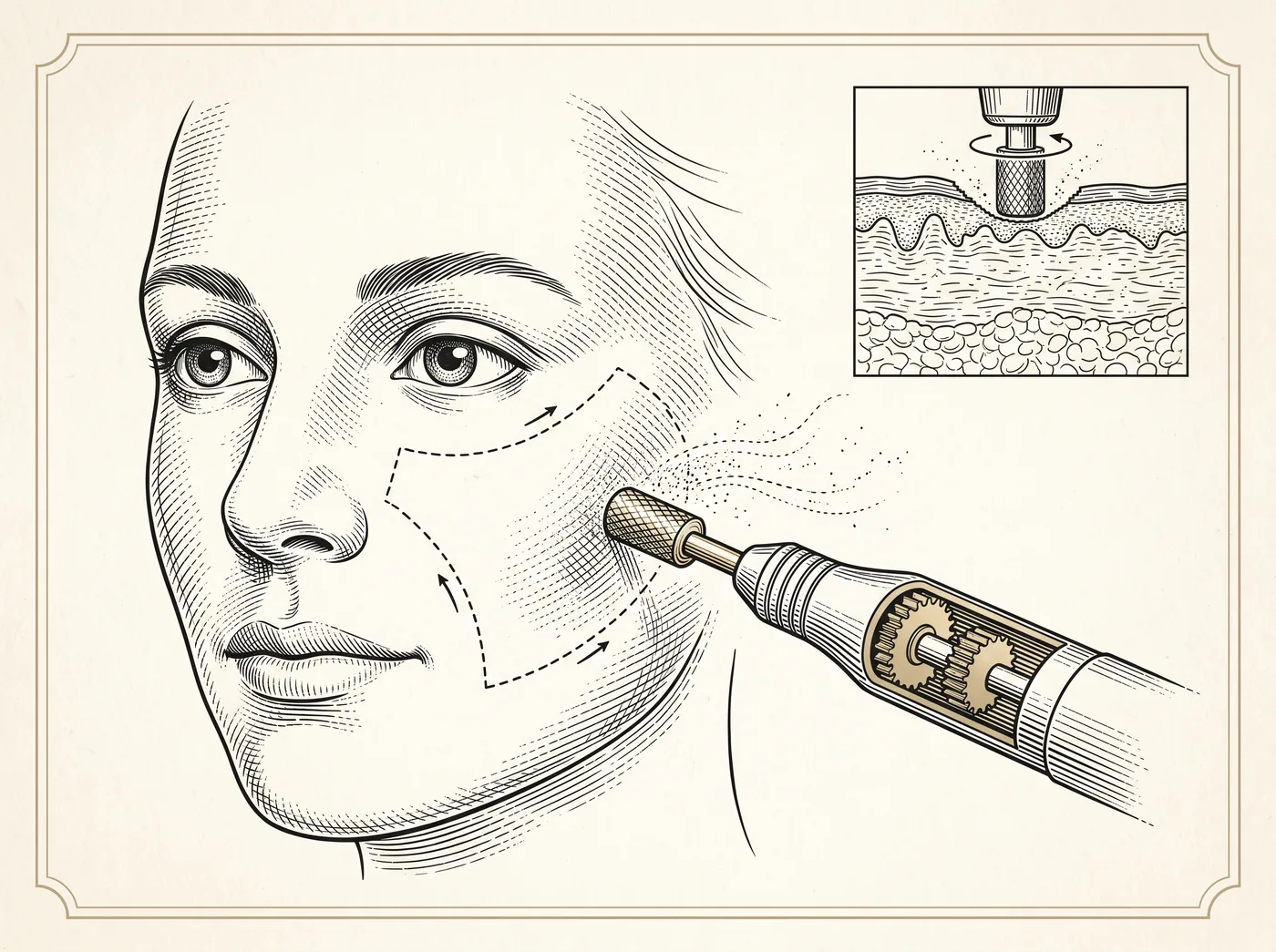
Dermabrasion — also called mechanical peeling — exfoliates the surface layer of the skin in a controlled manner to renew its appearance. It can be performed on small areas or the entire face, under anesthesia suited to each case.
Goals of the procedure
Every procedure has indications, contraindications, and risks. An individual evaluation with a physician is essential to determine the appropriate treatment for each case.
Frequently asked questions
A rotary instrument — or the manual technique — removes the outermost layer of the skin in a controlled manner, stimulating cell renewal.
The skin goes through phases of redness and re-epithelialization, with timelines that vary according to the depth of the treatment. Strict sun protection is essential during this period.
The principle is the same — renewing layers of the skin — but dermabrasion is mechanical, while a chemical peel uses substances. The choice depends on the indication for each case.
An evaluation of the skin's phototype and condition determines the indication and the safe parameters for each person.
The next step
In a hospital dedicated exclusively to plastic surgery, your consultation begins with listening — and ends with a plan made for you.


