 Espaço daPlásticaHospital · Campo Grande
Espaço daPlásticaHospital · Campo Grande
Espaço daPlásticaHospital · Campo Grande
Face · Surgical procedure
Blepharoplasty treats excess skin, muscle, and fat pads of the eyelids — upper, lower, or both. It is indicated for aesthetic reasons as well as when excess skin begins to interfere with the field of vision.
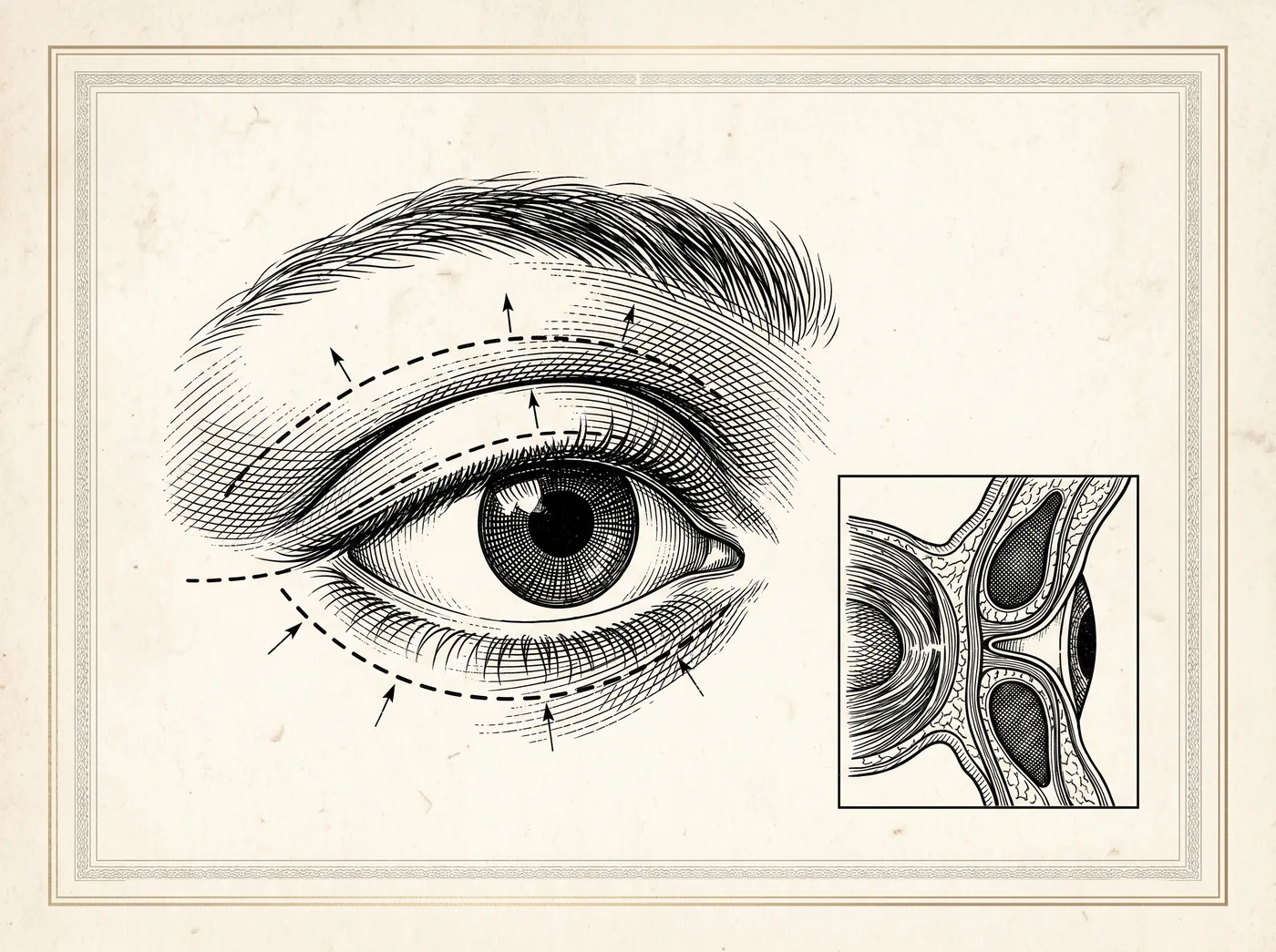
Goals of the procedure
Every surgical procedure involves risks. An individual evaluation with a plastic surgeon is essential to determine the appropriate treatment for each case.
Frequently asked questions
It depends on the concern and the examination: the procedure can treat only the upper eyelids, only the lower ones, or both, in the same surgical session.
Frequently, local anesthesia with sedation — but the decision depends on the case and on the pre-anesthetic evaluation, made together with the team.
The incisions are placed within the natural folds of the eyelids, where they tend to become barely noticeable as the scar matures.
Mild swelling and bruising are common in the first few days. Cold compresses and keeping the head elevated are usually part of the postoperative instructions.
The surgery treats skin and fat pads; dark pigmentation of the skin has other causes and approaches. An evaluation clarifies what applies to your case.
The next step
Every case is unique — and that is exactly how we treat it. Book a consultation and speak with someone who lives this specialty.


