 Espaço daPlásticaHospital · Campo Grande
Espaço daPlásticaHospital · Campo Grande
Espaço daPlásticaHospital · Campo Grande
Body · Surgical procedure
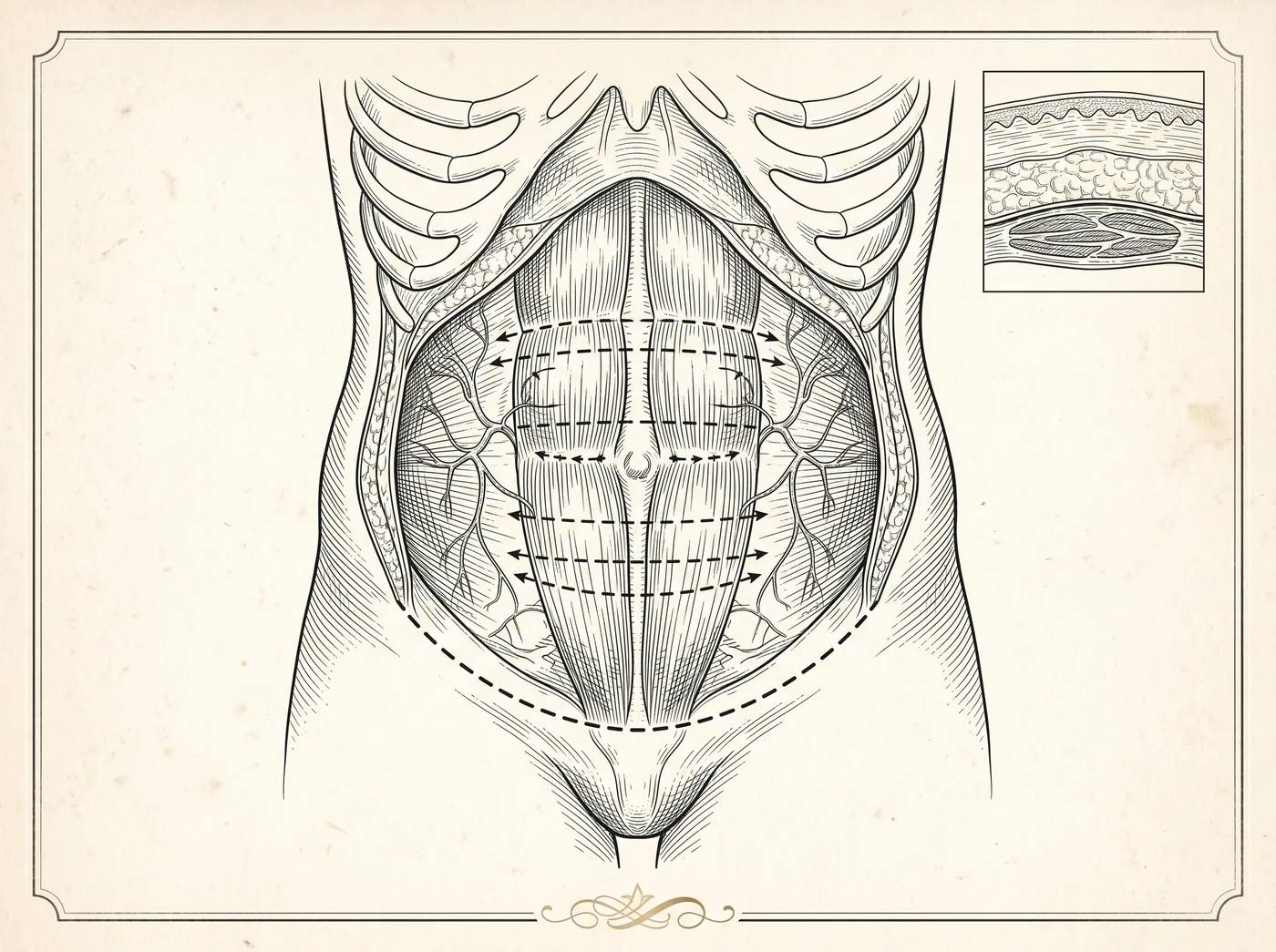
A tummy tuck (abdominoplasty) removes excess skin and fat from the abdomen and addresses the muscles of the abdominal wall, with possible repositioning of the navel. It is often sought after pregnancies or significant weight changes — from the mini tummy tuck to the full abdominoplasty, the technique is defined case by case.
Goals of the procedure
Every surgical procedure involves risks. An individual evaluation with a plastic surgeon is essential to determine the appropriate treatment for each case.
Frequently asked questions
A full tummy tuck involves a hip-to-hip incision, treatment of the entire abdominal area, and possible repositioning of the navel. The mini tummy tuck is less extensive and addresses the area below the navel. The indication depends on the physical exam.
In general, initial recovery takes 2 to 4 weeks, with a gradual return to activities; full recovery can take 3 to 6 months. Timelines vary case by case.
Like any surgery, it involves risks — including infection, bleeding, seromas, healing irregularities, and asymmetries. These are discussed openly during the consultation, along with the preventive measures adopted.
The scar is planned to sit along the bikini line, in an area usually covered by underwear. Its length depends on the amount of skin to be treated.
In selected cases, a tummy tuck can be combined with liposuction or breast procedures — the so-called mommy makeover. The combination depends on safety criteria assessed individually.
No. The surgery addresses skin, localized fat, and muscles — it is not a weight-loss method. Ideally, your weight should be stable before the procedure.
The next step
In a hospital dedicated exclusively to plastic surgery, your consultation begins with listening — and ends with a plan made for you.


